


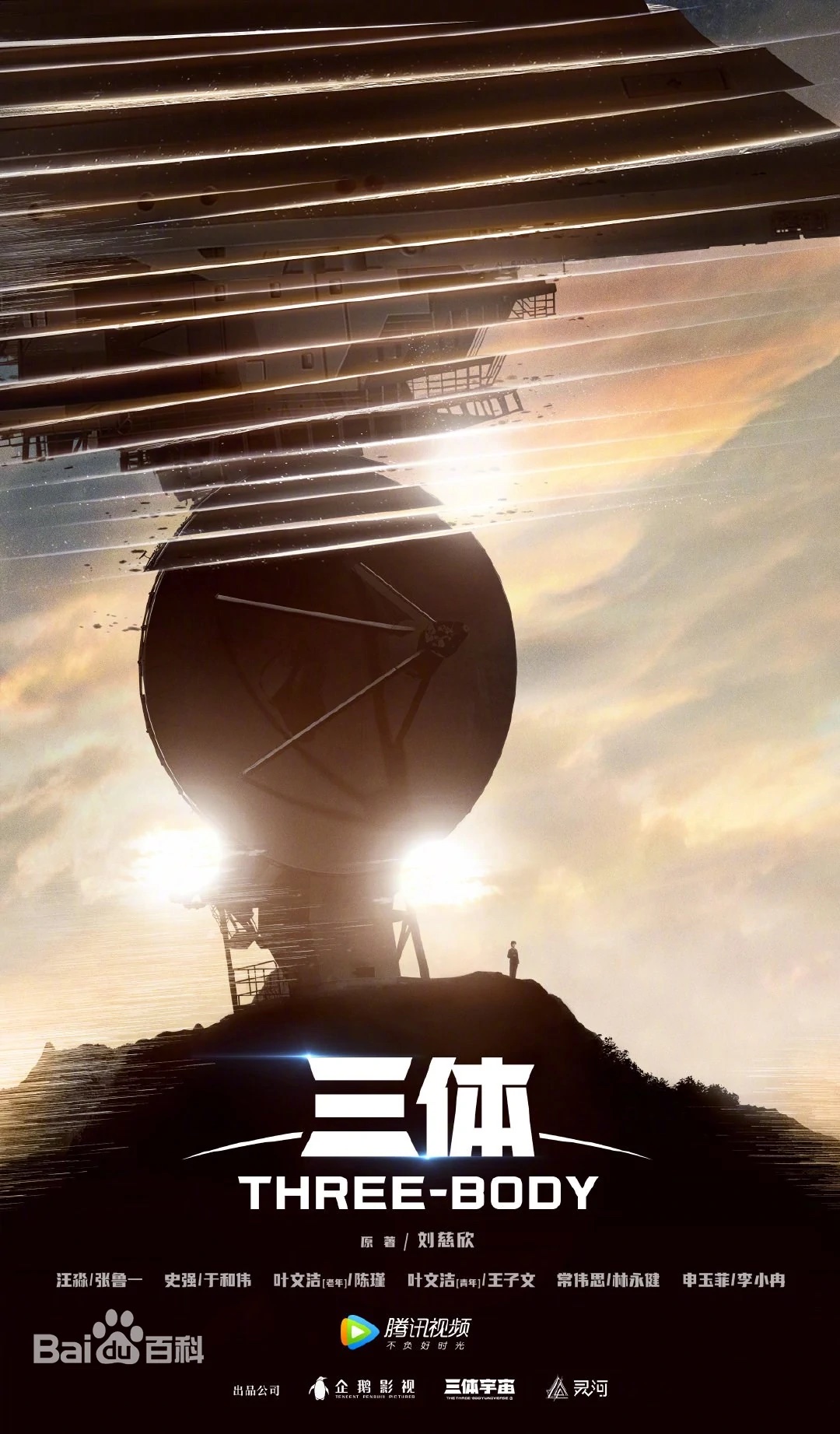
To broaden my horizons and out of general interest, I watched «3 Body Problem» the other day. It's a TV series based on the famous book by the Chinese author Liu Cixin, so I watched the Chinese adaptation. Not the Netflix version, which exists too.
At first I wanted to read the book, but I figured it would take very long — so I decided to watch. I didn't notice right away, though, that the Chinese version has not the usual 10–12 episodes, but a whole 30. The book, however, really is very famous — the first in a trilogy. Oh well.
The genre here is science fiction, as scientific as it gets. About scientists. Something strange happens to them at the start of the series. Some kind of dissonance, or, on the contrary, an emotional catharsis. After that, some of them have accidents, while others even declare that their science doesn't exist and kill themselves. It's all mysterious and very suspicious, maybe there's a conspiracy, but whose — reptilians, the Illuminati or hostile Western intelligence services? Unclear.
A scientist and a policeman set out to figure out what happened. And while the scientist cares about physics, metaphysics and the deeper meaning of what's going on, the policeman is more down to earth — whom to catch and punish for the deaths of smart, talented comrades. At least at first.
There's plenty of mystery at the beginning, and the first episodes strongly reminded me of the old Strugatsky brothers' book «Definitely Maybe» («A Billion Years Before the End of the World»), where an insidious universe itself punished scientists so they wouldn't poke their noses where they shouldn't. But the plot here is original, not some clone, so it's not that simple.
There's also a Fringe vibe — that gorgeous sci-fi show from the late 2000s. But that's in moderation too: pleasant, without fawning, let alone copying.
I also liked the opening titles and the cool Chinese song in the background. Very atmospheric. I don't know what the song is about, I probably need a few more years of study to understand something like that. But in the series itself I managed to catch some Chinese words and phrases I already know behind the dubbing. Which is pleasing, of course.
Having watched it, I was a bit surprised that they stretched the story over a whole 30 episodes. Maybe that's typical of their TV production — I don't know. The Netflix version didn't drag it out. Then again, its IMDb rating is currently 7.5 versus 7.6 for the Chinese version. The long version has its advantages too — unhurried pace, atmosphere, contemplation. I'm a bore, I like it.
It's also somewhat confusing in places that some seemingly serious moments are peppered with lulz. Perhaps that's also a tradition of a culture I'm not very familiar with.
But overall it's good, and the take on the global problem it raises is original too. It won't blow your mind, but it's solid and useful for broadening your artistic horizons.
Too bad there's nothing in the news about a Chinese adaptation of the second book in the trilogy, «The Dark Forest». But the second season of the Netflix production seems to be coming out this year. So I guess I'll have to watch the Western version too. And we will, it's interesting after all.